Building ERC-8004 Verifiable AI Agents with Automata & Cantina

Autonomous AI agents require a new trust primitive, a need now formalized by Ethereum frameworks like ERC-8004. Proving an agent is running the intended code demands onchain hardware-level attestation.

Automata's infrastructure, including the DCAP Dashboard and a complete suite of Attestation SDKs, makes TEE verification practical, cost-effective, and continuous. Cantina provides the essential tooling for agentic applications built on this foundation. 

TEE-attested agents on Ethereum

Remote attestation is a core primitive for verifiable AI agents, enabling them to prove their integrity and confidentiality onchain. TEE attestations are one of the cryptographic proof models for Ethereum standards like ERC-8004, providing the hardware-level guarantee that an agent's code and data are secure.

Cantina is collaborating with Automata Network to secure the complete development lifecycle for these agents. Automata delivers the onchain DCAP verification for Intel SGX and TDX, alongside broad TEE attestation support for other TEE families such as AMD SEV-SNP and AWS Nitro. This ensures verifiable integrity for TEE-based agentic workloads.

To support developers building TEE-attested agents, Cantina is offering streamlined access to its security platform. This includes preferential pricing on solutions and free bug bounty programs.

Crowdsourced security reviews conducted in Cantina Code, offering efficient, high-signal, and comprehensive code coverage for web3 protocols. Hundreds of top security researchers compete for rewards, providing in-depth codebase analysis.

Connecting protocols with top security researchers to uncover and report bugs, offering the highest signal bug bounty program in the Web3 ecosystem. Paired with Cantina Code, communication and quality control is streamlined, minimizing spam during review.

Offering a bespoke experience, clients can access niche security talent, including Spearbit, for OPSEC reviews, penetration testing, curated fuzzing, and Cosmos and Solana expertise.

A unique service that offers protocols a seamless booking experience for managed team security reviews. Cantina handles team selection, with communication taking place inside the platform itself, ensuring a streamlined and efficient process.

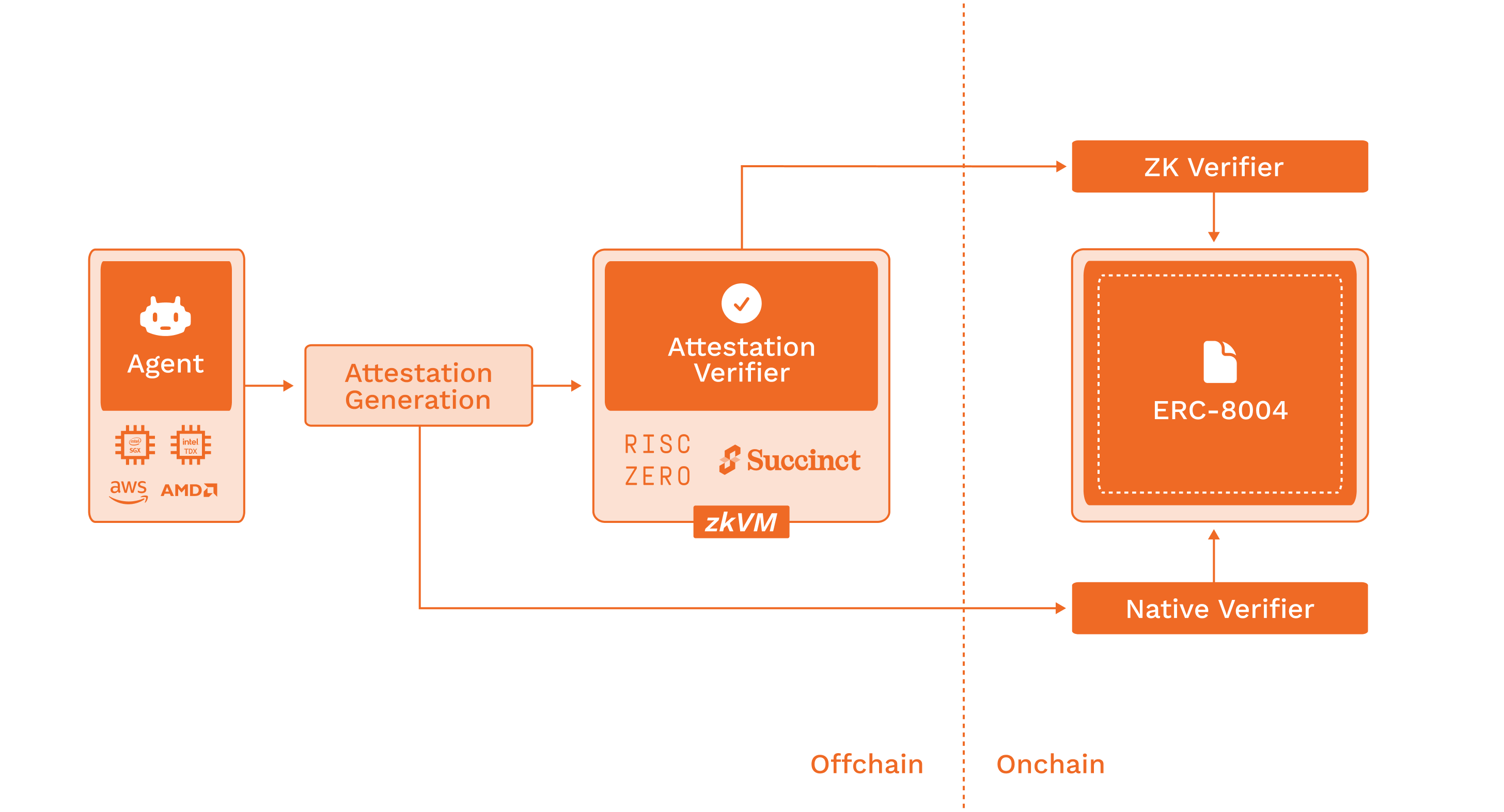
How ERC-8004 works with machine-verifiable AI agents

Cantina visual placeholder for upcoming content.

Automata DCAP Dashboard

Automata’s DCAP Dashboard is a complete management system that automates onchain collateral management for Intel SGX/TDX. This allows developers to verify TEEs with confidence, eliminating the risk of unexpected, silent failures.

  • Anchor

    Aggregate and publish all DCAP collaterals (TCB, CRLs, PCK certificates) directly onchain. Establish a single, publicly auditable source of truth for Intel SGX and TDX verification.

  • Maintain

    Ensure continuous validity with 24/7, automated collateral upkeep. DCAP Dashboard tracks Intel's TCB changes and certificate expirations, pushing updates onchain to keep attestations valid.

  • Verify

    Avoid silent verification failures. Submit Intel SGX or TDX quotes to validate enclave integrity, or use the DCAP Dashboard to test and monitor attestation status.

  • Audit

    Enable full transparency with a built-in activity log. The DCAP dashboard logs every collateral update and attestation event, providing a clear record for accountability.

Interested in learning more?

Reach out to our team by filling out the form below.

Contact information

Please enter your name and the best email to reach you below.

@

Additional information

Please enter your organization's name and a brief description of your security needs below as well as any additional information you'd like to include.

Type of service

Below are the core services Cantina provides its clients. Please select the service that you'd like to request a quote for.

Your submission has been received!
Oops! Something went wrong while submitting the form.

FAQ

The following FAQ explains how Automata’s onchain attestation, verifiable TEEs, ERC-8004, and the Cantina collaboration provide a secure, verifiable foundation for the agentic age.

What is a TEE-attested agent?

A TEE-attested agent is an AI agent that uses a Trusted Execution Environment (TEE) to cryptographically prove its integrity and confidentiality. It allows the agent to prove to a smart contract, or any other party, that it is running the correct, unmodified code and that its model weights and private data are secure.

What is ERC-8004?

ERC-8004 is a proposed Ethereum standard that formalises trust for autonomous agents. It defines TEE attestation as the core "cryptographic proof" model, allowing agents to register, validate, and build a verifiable, onchain reputation based on hardware-level guarantees.

What is remote attestation and why do agents need it?

Remote attestation is the core process an agent uses to prove it is running in a genuine TEE. It is the key component that makes an agent verifiable. This is essential for the agentic age, as it allows a smart contract to cryptographically trust a remote AI agent without trusting its human owner.

What is DCAP attestation?

DCAP (Data Center Attestation Primitives) is Intel's specific protocol for remote attestation. It is the standard used to verify the integrity of Intel SGX and TDX enclaves, which are common TEEs used to build agents. Verification is often brittle and complex, as it relies on a set of collateral files from Intel that are constantly being updated.

Why is onchain TEE verification so difficult?

Onchain verification of DCAP Attestation is hard because the attestation collateral (like TCB info and certificates) expires and changes frequently. If a dApp or protocol uses outdated collateral, the verification will fail without warning. This creates a massive operational burden, as projects must manually track and update this collateral 24/7 to prevent service interruptions.

How does Automata solve this?

Automata provides a complete, two-part solution to make onchain attestation practical for agents with its DCAP Dashboard, a complete management system that automates the entire collateral lifecycle for Intel SGX/TDX. It anchors all collateral onchain, monitors it 24/7, and automatically pushes updates, eliminating the risk of verification failures. At the same time, it has a suite of Attestation SDKs with broad support for all major TEE families, including Intel SGX/TDX, AMD SEV-SNP, and AWS Nitro. These work with proving programmes like Risc Zero and Succinct to slash gas costs, making TEE attestation viable for agent frameworks like ERC-8004.

What are the key features of the DCAP Dashboard?

The dashboard is built on four pillars to manage the attestation lifecycle:

  • Anchor: It publishes all DCAP collateral onchain, creating a single, publicly auditable source of truth.
  • Maintain: It provides 24/7 automated upkeep, tracking Intel's TCB changes to keep attestations valid.
  • Verify: It provides a simple way to validate an enclave's integrity, either programmatically or by using the dashboard to test and monitor.
  • Audit: It includes a built-in activity log that records every collateral update, providing a clear record for accountability.

What is the Automata and Cantina partnership?

Automata provides the hardware-level trust with the infrastructure to verify the TEE and the agent's code. Cantina provides a simple, cost-effective way for developers to secure the smart contracts and dApps they build on top of that infrastructure.

What benefits does Cantina offer to developers?

Projects building within the Automata ecosystem receive special benefits on Cantina's platform. This includes preferential pricing (a discount) on solutions and complimentary bug bounty programmes to secure their entire application stack.

Where can I learn more about Automata's attestation tools?

Visit Automata Network to explore documentation, SDKs, and the live DCAP Dashboard. You can also follow Automata and Cantina for updates on expanding support for verifiable TEEs, onchain attestation, and what's next at the turn of the agentic age.